
Malacca Food Guide: What & Where to Eat in Melaka
10 Malaccan Food You Must Try
Malacca (Melaka) is where cultures collide, probably more than in the rest of Peninsular Malaysia, and it’s clearly reflected in its food scene.
With Malay, Chinese, Indian, Peranakan, and even Portuguese influences all in the mix, the city is truly a foodie playground.
As Malaysians, it’s not uncommon for us to travel interstate just to satisfy a craving or to find special delicacies in their places of origin. And Malacca is one of the most popular gastronomic destinations for local foodies.
Join me as I take you to explore the top culinary delights that define the essence of Malacca.
Also read: Malacca Travel Guide: 21 Fun Things to Do in Malaysia’s Historic Gem
This post may contain affiliate links, which means I may earn a commission at no extra cost to you. As an Amazon Associate, I earn from qualifying purchases. For more details, please read my Privacy Policy.
Friendly note to my Muslim readers: Not every dish or restaurant mentioned here is halal-certified. If you have specific dietary requirements, please double-check with the restaurant directly before your visit.
1. Chicken rice balls

You may have tried the famous Hainanese chicken rice, but have you tried chicken rice that is rolled into balls? This creative twist on the classic dish is a beloved specialty of Malacca.
The rice is cooked with chicken broth and aromatics, then molded into small bite-sized spheres, served with succulent pieces of steamed or roasted chicken, and accompanied by chili sauce, ginger paste, and soy sauce.
The story goes that it was invented by a street peddler who wanted to provide a more convenient and portable way to enjoy the dish because most of her customers were sailors and laborers. Rolling the rice into balls also supposedly keeps it warm longer.
📍 Where to eat:
- Ee Ji Ban Chicken Rice Balls (Jalan Melaka Raya 3)
- Hoe Kee Chicken Rice (Jalan Hang Jebat)
2. Nyonya laksa

Nyonya laksa is a rich, aromatic noodle soup that’s a classic in Peranakan cooking. The broth is creamy from coconut milk and packed with fragrant herbs and spices like lemongrass, galangal, turmeric, and chili.
The soup is typically served with rice vermicelli noodles (although you can choose a different type if you prefer), along with a variety of toppings such as prawns, shredded chicken, tofu puffs, and hard-boiled eggs.
Nyonya laksa is renowned for its complex flavors, with the creaminess of the broth beautifully complementing the spiciness of the chili paste (optional). While you’re at it, try the baba laksa as well or a combination of the two (laksa kahwin).
Check out my full post on the many types of laksa in Malaysia.
📍 Where to eat:
- Nancy’s Kitchen (Jalan KL 3/8, Taman Kota Laksamana)
- Jonker 88 (Jalan Hang Jebat)
3. Satay celup
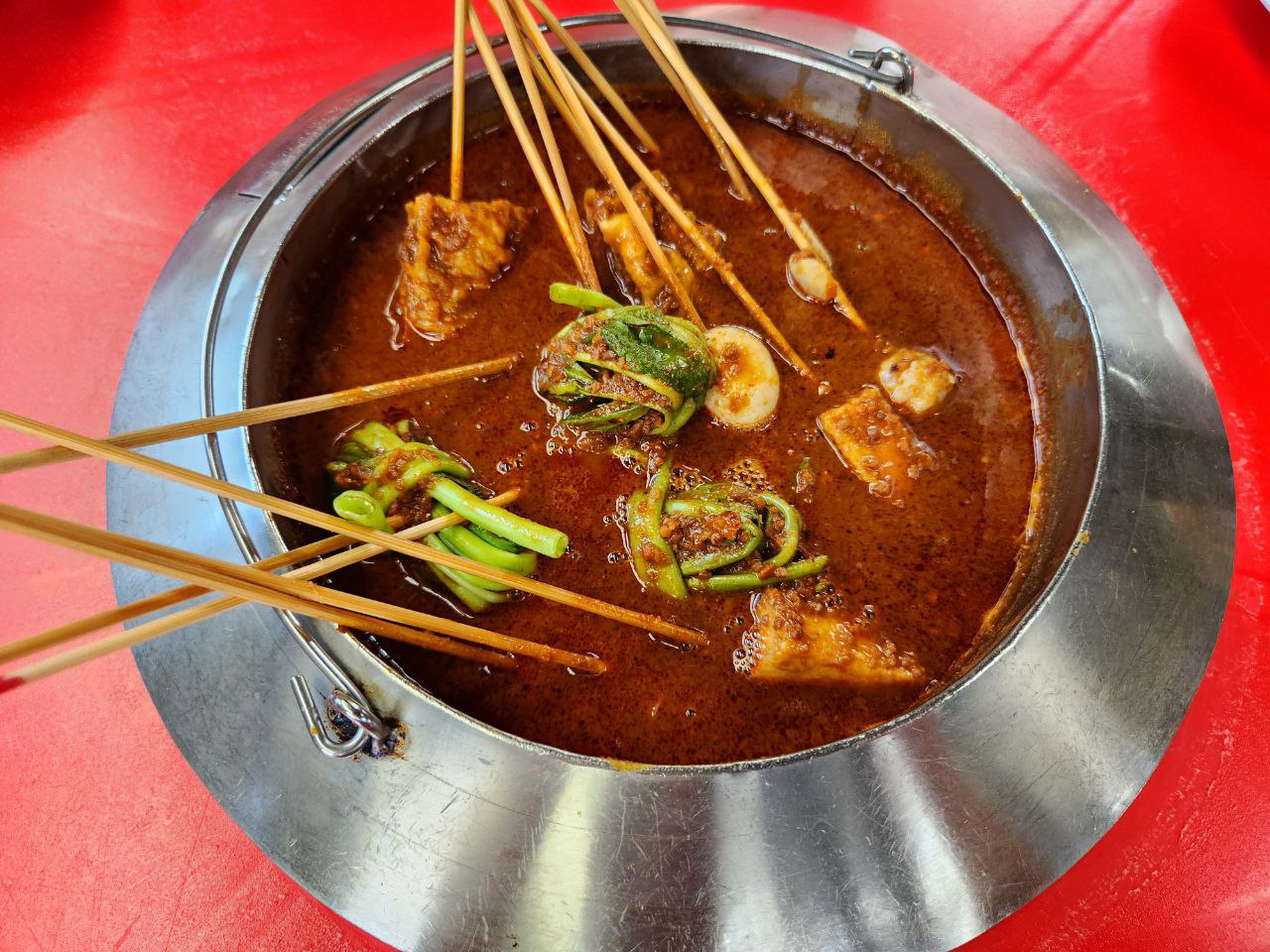
Satay celup is another creative invention of Malacca. A unique take on the traditional satay, it features skewered meats, seafood, vegetables, and other bite-sized goodies cooked in a communal pot of boiling, fragrant peanut sauce.
Diners are given a selection of raw ingredients on skewers, which they dip into the simmering sauce until cooked to perfection.
Satay celup is a fun communal meal, where friends and family gather around the table to share in the joy of dipping, cooking, and savoring each bite.
📍 Where to eat:
- Ban Lee Siang Satay Celup (Jalan Ong Kim Wee)
- Capitol Satay Restaurant (Jalan KPKS 3)
4. Asam pedas

Asam pedas is a tangy and spicy fish stew made with a blend of tamarind and a variety of herbs and spices, including lemongrass, galangal, turmeric, and chili.
The result is a rich, flavorful broth that hits you with just the right mix of sour, spicy, and savory.
Fish such as mackerel or stingray is simmered in the flavorful broth until tender and infused with the aromatic spices. Asam pedas is often served piping hot alongside steamed rice.
📍 Where to eat:
- Asam Pedas Pak Man (Jalan Knmp 2a)
- Cottage Spices Nyonya Restaurant (Jalan Merdeka)
5. Portuguese cuisine

Portuguese food is one of the tastiest surprises in Melaka’s food scene. The Kristang community (descendants of Portuguese settlers who married local Malays back in the 1500s) have kept their unique culture alive through language, music, and especially food.
Head over to the Portuguese Settlement, a coastal village set up in the 1930s, and you’ll find family-run restaurants serving up dishes like devil’s curry, baked fish, and buttery crab. The flavors are the embodiment of East and West on a plate.
📍 Where to eat:
- De Lisbon Traditional Portuguese Restaurant (Portuguese Settlement)
- 339 Seafood (Portuguese Settlement)
- 7 Pescados (Portuguese Settlement)
6. Peranakan (Nyonya) cuisine

Peranakan cuisine, also known as Nyonya cuisine, is a culinary tradition that emerged from the intermarriage between Chinese immigrants and local Malays in the Malay Archipelago, particularly in areas like Malacca, Penang, and Singapore.
A mix of Chinese, Malay, and regional influences has shaped a one-of-a-kind food culture — rich with bold flavors, fragrant herbs, and spices.
Signature dishes include Nyonya laksa, ayam buah keluak (chicken cooked with Indonesian black nuts in a thick, spicy sauce), and Nyonya kuih, a variety of sweet and savory snacks such as kuih lapis (layered cake) and kuih dadar (pandan crepes filled with coconut and palm sugar).
📍 Where to eat:
- Kocik Heritage Nyonya Restaurant (Jalan Tun Tan Cheng Lock)
- Nancy’s Kitchen (Jalan KL 3/8, Taman Kota Laksamana)
- Atlantic Nyonya (Jalan Merdeka, Taman Merdeka Jaya)
7. Duck noodles

Another popular dish in Melaka, duck noodles typically feature tender duck meat, either roasted or braised, served with springy noodles (or any noodles of your choice) bathed in a rich broth.
The broth is simmered with a mixture of herbs and spices, and further enhanced with condiments and garnishes, such as fresh herbs, crunchy bean sprouts, and tangy pickled vegetables.
It can be enjoyed as a hearty breakfast or a meal at any time of the day.
📍 Where to eat:
- Tengkera Duck Noodles (Jalan Kota Laksamana)
- Malim Duck Noodles (Jalan Rahmat 1, Taman Malim Jaya)
8. Kuih keria (sweet potato donuts)

Kuih keria, a sugar-glazed sweet potato donut, is said to have originated in Melaka during sultanate era in the 15th century.
Originally created by palace chefs for royal consumption, the recipe was closely guarded for centuries until only about a hundred years ago when commoners gained access to it through the chefs’ descendants.
It’s available in two main variations: one coated with white sugar and another with gula Melaka, Melaka’s palm sugar.
The latter is particularly popular for its intense smoky aroma and distinct caramel flavor, tinged with a subtle bitterness, perfectly complementing the soft and chewy interior.
📍 Where to buy:
- Keria Antarabangsa Limbongan Hjh Rahmah (Jalan Limbongan, Kampung Limbongan)
- Keria Antarabangsa Haji Jalil Limbongan (Jalan Kristal Merah 2, Taman Limbongan Jaya)
9. Cendol

Cendol, one of Malaysians’ favorite desserts, is made with shaved ice, coconut milk, palm sugar syrup (gula Melaka), and green jelly noodles (cendol). This delightful concoction offers a cool respite from the tropical heat.
What sets Melaka’s cendol apart is the use of gula Melaka, a unique and aromatic palm sugar produced locally in the region, which infuses the dessert with a rich caramel flavor.
📍 Where to eat:
- Cendol Kampung Hulu (Jalan Tun Ali)
- Cendol Jam Besar Bandar Hilir Melaka (in front of the clock tower, Bandar Hilir)
- Jonker 88 (Jalan Hang Jebat)
10. Klebang coconut shake

Klebang Beach may be popular due to its fine white sand, swaying coconut trees, and breathtaking views of the Malacca Strait.
However, it’s the indulgent coconut milkshakes that truly steals the show.
Served in restaurants and makeshift stalls along the beachfront, this delightful drink blends freshly extracted coconut water, creamy coconut milk, shaved ice, and topped with a scoop of coconut ice cream.
📍 Klebang Original Coconut Shake (Solok Kampung Bahagia)





3 Comments