Top 16 Things to Do in & Around Sekinchan: A Complete Guide on Selangor’s Idyllic Rice Farming Town
English | Bahasa Malaysia
* This article was originally published on Ummi Goes Where? in 2021 and has been updated periodically with the latest travel information, tips, and recommendations.
16 Best Things to Do in & Around Sekinchan
For a long time, Sekinchan flew under the radar. While travelers flocked to beaches, islands, and highland retreats, this small fishing and farming town quietly went about its business, producing some of Malaysia’s most important crops and freshest seafood.
Not long after my bamboo-themed glamping staycation at Tadom Hill Resorts with a group of former colleagues, we decided to get together again for another road trip before the fasting month began — this time, with a couple of new faces joining the group.
We were looking for somewhere close enough for a quick escape from Kuala Lumpur, but different enough to feel like we’d actually gone somewhere.
Between the endless rice fields, fishing villages, seafood restaurants, and nearby nature attractions, Sekinchan turned out to be exactly that.
This post may contain affiliate links, which means I may earn a commission at no extra cost to you. As an Amazon Associate, I earn from qualifying purchases. For more details, please read my Privacy Policy.
Sekinchan at a glance
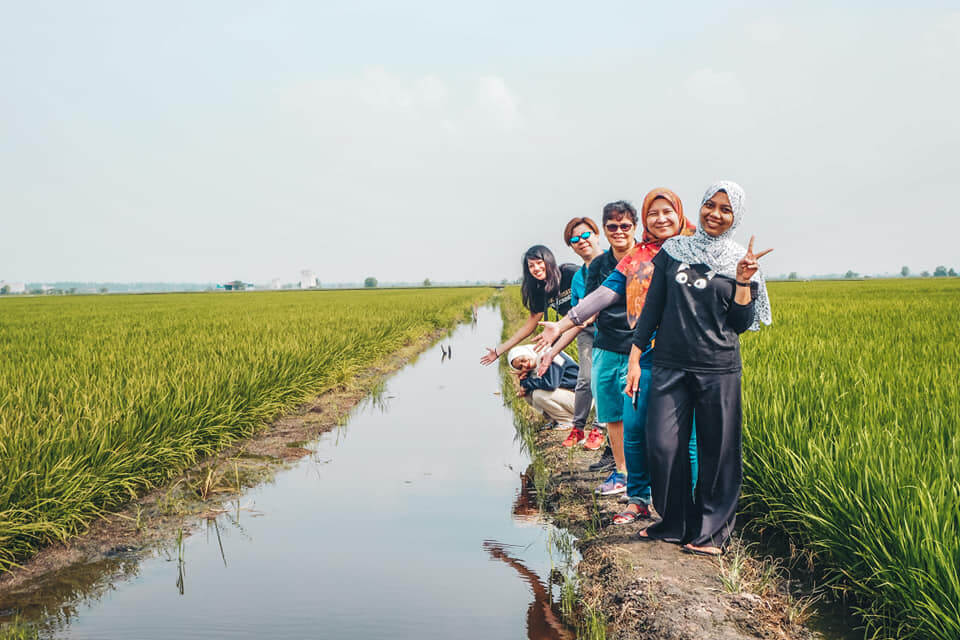
Located in the district of Sabak Bernam, Selangor, Sekinchan is a coastal town about 100 kilometers (62 miles) north of Kuala Lumpur.
The name “Sekinchan” is believed to come from a phrase meaning “village suitable for cultivation”, which is fitting considering the town’s reputation as one of Malaysia’s major rice-producing areas.
Today, Sekinchan is best known for two things: its sprawling paddy fields and its fishing industry. Vast stretches of rice fields surround the town, creating landscapes that change dramatically throughout the year, from bright green carpets to golden fields ready for harvest.
In addition to farming, Sekinchan is home to a busy fishing community, which explains the abundance of seafood restaurants serving freshly caught fish, crabs, prawns, and shellfish.
The town gained wider recognition after appearing in several television dramas, including Outbound Love and The Seeds of Life. But despite its growing popularity, Sekinchan has managed to retain much of its small-town character and laid-back atmosphere.
With its unique combination of agriculture, coastal scenery, and local culture, Sekinchan remains one of the easiest and most rewarding weekend getaways from Kuala Lumpur.
Best time to visit Sekinchan
The weather in Sekinchan varies little throughout the year, with temperatures ranging from 21°C (70°F) to 32°C (90°F) and a chance of rain during most months.
However, if seeing the famous rice fields is high on your list, timing can make a huge difference.
Rice is generally planted twice a year in Sekinchan, around March and September. While exact dates may vary depending on weather conditions and farming schedules, the landscape typically follows this cycle:
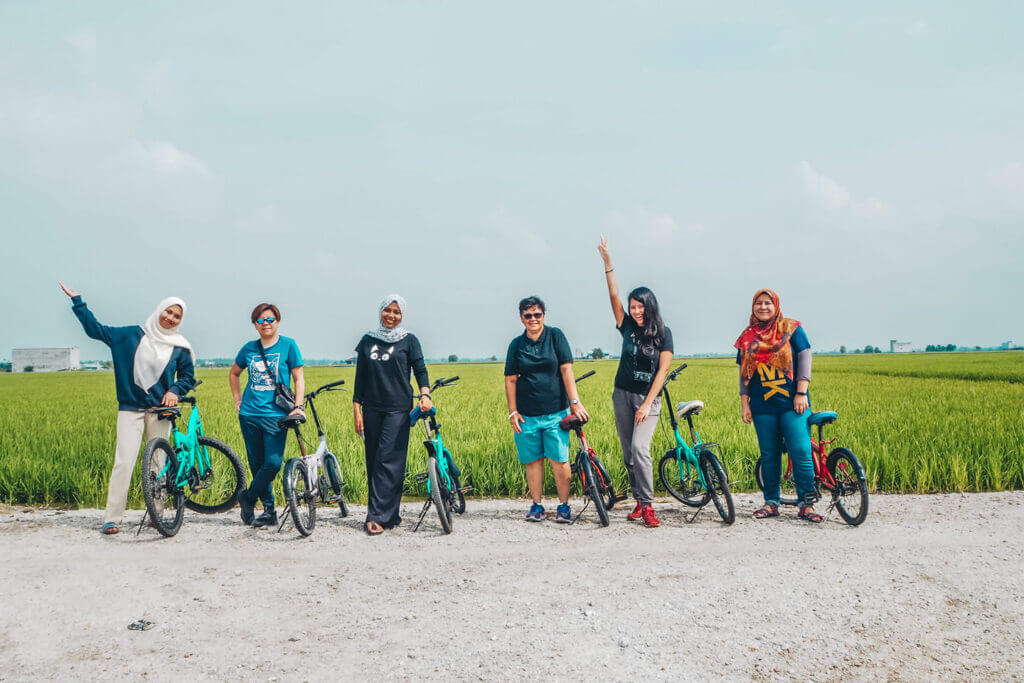
Green rice fields
- Mid-March to May
- Mid-September to November
Golden rice fields
- Around May to early June
- Around November to early December
As the rice matures, the fields transform into shades of gold, making this one of the most photogenic times to visit.
On the other hand, if you want to see golden fields, go in the middle of May or the middle of November when the plants are mature and ready to be harvested.
Harvesting usually takes place in June and December. If you’re interested in seeing agricultural machinery at work, this can be an interesting time to visit.
After harvest, many fields are left bare or muddy while preparations are made for the next planting cycle.
Because agricultural schedules can shift slightly from year to year, it’s worth checking with your accommodation or local tourism operators before finalizing your trip.
How to get to Sekinchan
By car
Driving is by far the most convenient way to visit Sekinchan, especially if you plan to explore the surrounding attractions at your own pace.
From Kuala Lumpur, the journey typically takes around 1.5 to 2 hours, depending on traffic. Most travelers take the LATAR Expressway and continue toward Kuala Selangor and Sekinchan.
Having your own vehicle also makes it much easier to visit places such as Kuala Selangor, Bukit Melawati, and the firefly and blue tears viewing areas.
By bus
We didn’t travel by bus ourselves, but based on the latest information available online, you can take a bus from either Pudu Sentral or Terminal Bersepadu Selatan (TBS) in Kuala Lumpur to Sekinchan, Kuala Selangor, or Sabak Bernam.
Routes and schedules can change, so it’s best to check current timetables through bus operators or online booking platforms before traveling.
Getting around Sekinchan
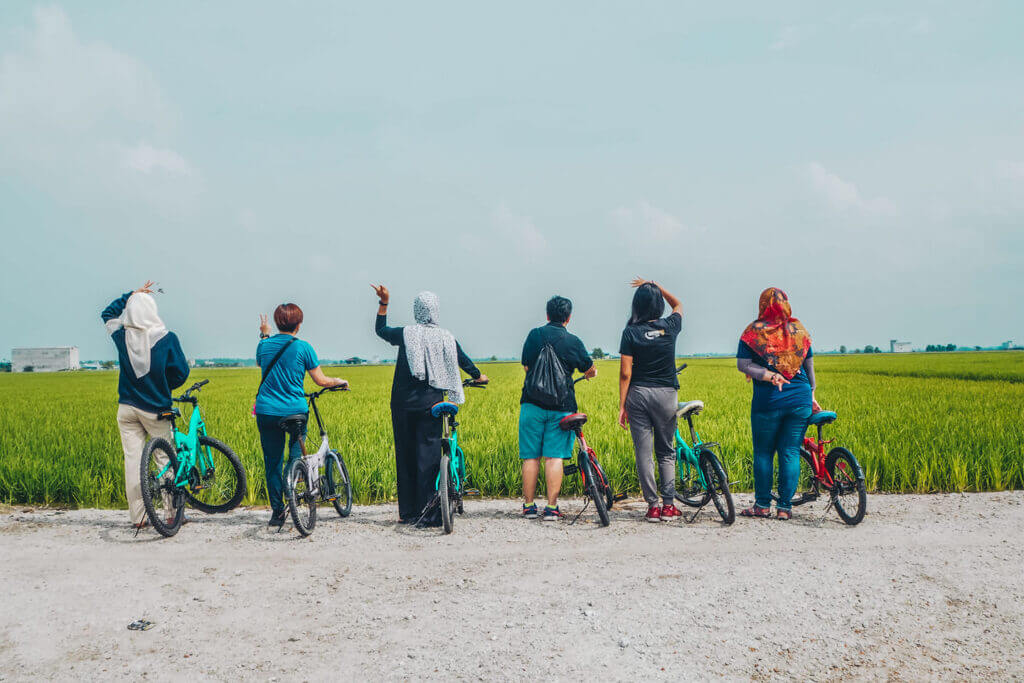
Once in town, bicycles are one of the best ways to explore Sekinchan’s rice fields and quiet village roads.
Bike rentals are available from some hotels, homestays, and local rental shops. Ride-hailing services may also be available, although availability can be more limited than in larger cities.
For travelers staying near the main road, many attractions, restaurants, and cafes are within walking or cycling distance.
Things to do in & around Sekinchan
Sekinchan may be a small town, but there are plenty of attractions to keep you busy for a day or two. Beyond the famous rice fields, you’ll also find fishing villages, temples, quirky cafes, and nature experiences in nearby Kuala Selangor.
1. Visit the rice museum
A trip to Sekinchan wouldn’t be complete without learning a little about the crop that put the town on the map.
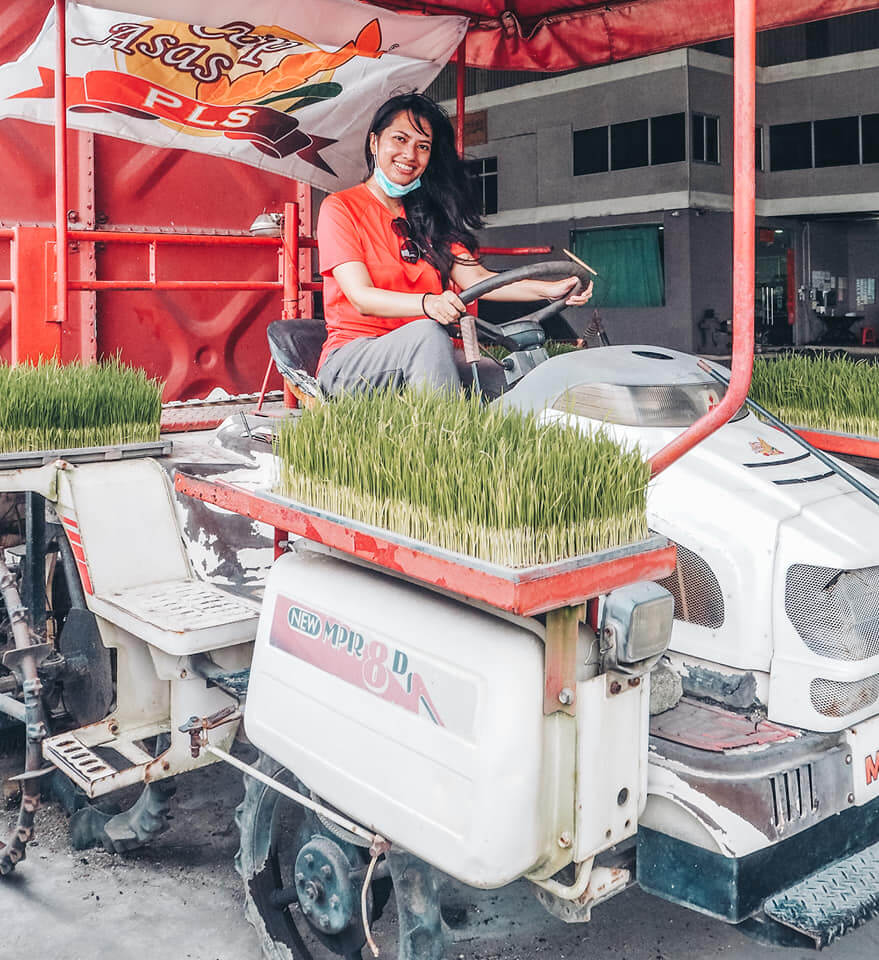
At the Sekinchan Paddy Gallery, visitors can learn about the rice-growing process, from planting and harvesting to milling and packaging. The museum also showcases farming tools and information about Malaysia’s rice industry.
It’s a surprisingly interesting stop, even if — and especially if — you’ve never given much thought to where your daily bowl of rice comes from.
Read: Paddy Museum, Sekinchan – Learn How Rice is Produced in Malaysia
📍 Lot No, Ban 2, 9990, Jalan Tali Air 5
2. Explore the rice fields
The rice fields are undoubtedly Sekinchan’s biggest attraction.
Depending on when you visit, you’ll be greeted by either lush green fields stretching to the horizon or golden landscapes waiting to be harvested. The flat terrain and wide-open skies make this one of the most photogenic places in Selangor.
If photography is your goal, try visiting early in the morning or late in the afternoon when the light is softer and temperatures are more comfortable.
Most importantly, stay on designated paths and avoid stepping into the fields. The rice plants are part of local farmers’ livelihoods, not just photo props.


3. Cycle around town
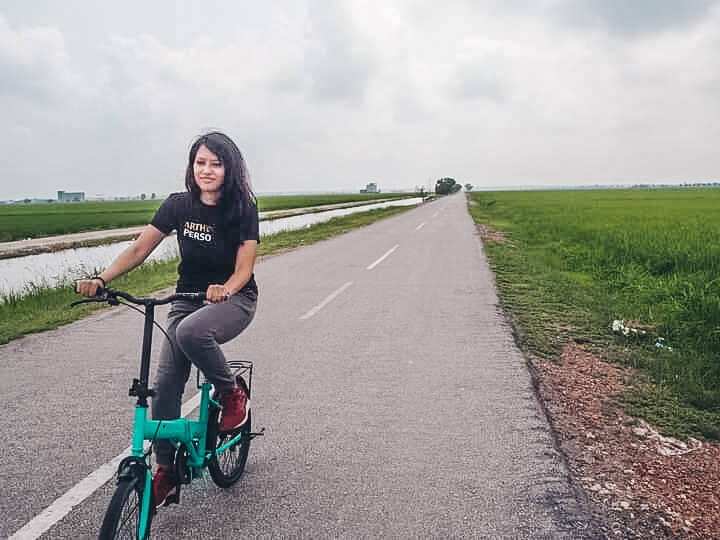
One of the best ways to experience Sekinchan is by bicycle.
The roads around the rice fields are generally flat and easy to navigate, making cycling suitable even for casual riders.
Along the way, you’ll pass farms, canals, village homes, and scenic viewpoints that are easy to miss when driving.
Bicycle rentals are available at some hotels, homestays, and local rental shops.
4. Go down memory lane at Ah Ma House
Ah Ma House, which translates to “Grandma’s House,” is one of Sekinchan’s most popular attractions.
Part museum and part snack shop, it displays household items from decades past, including vintage furniture, telephones, lanterns, kitchenware, and old photographs. It’s a nostalgic glimpse into everyday life in Malaysia before smartphones and modern conveniences took over.
Don’t leave without browsing the selection of traditional snacks, biscuits, and crackers sold on-site.
5. Chill out at Redang Beach
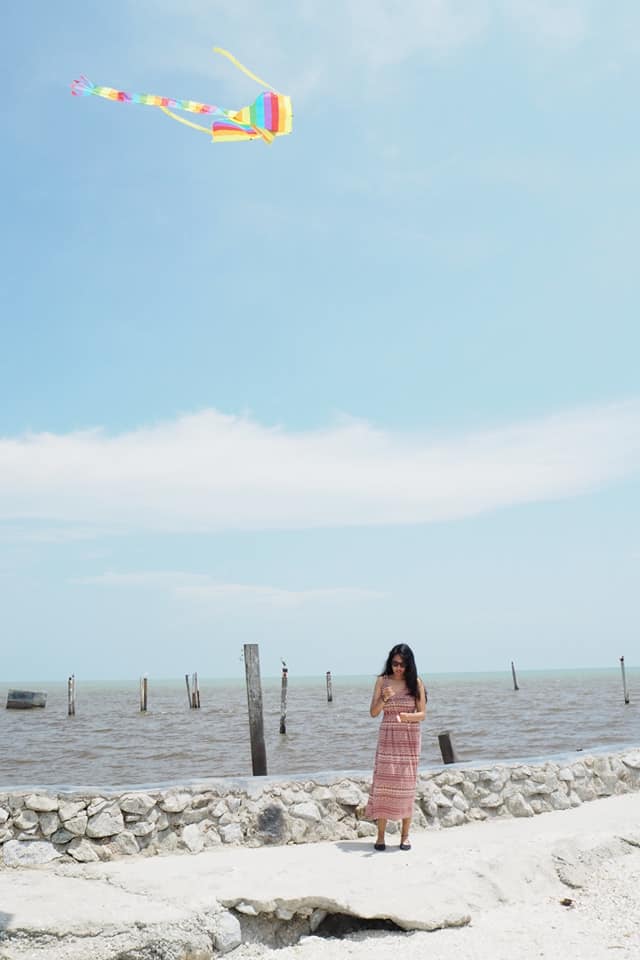

Located just a few kilometers from town, Redang Beach (not to be confused with Redang Island) is a pleasant place to unwind after exploring the rice fields.
It probably won’t win any awards for Malaysia’s most beautiful beach, but what it does offer is a peaceful atmosphere, sea breezes, and plenty of space to slow down for a while.
There are usually food stalls selling snacks and drinks, and on windy days you’ll often see visitors flying kites along the shore.
6. Make a wish at the wishing tree
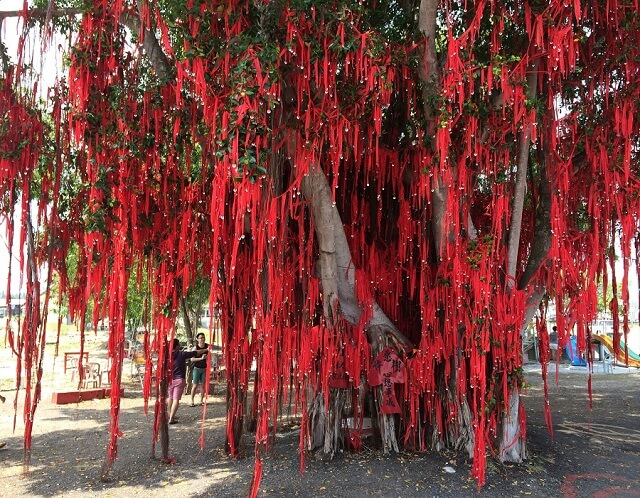
Near Redang Beach stands a peculiar-looking tree that seems to be all covered in red.
If you look closer, you’ll see that thousands of red ribbons hang from its branches, each carrying a visitor’s wish.
To participate, purchase a ribbon from the nearby temple, write down your wish, and toss it toward the tree. Coins are attached to the ribbons to help them reach the branches.
According to local belief, the higher your ribbon lands, the greater your chances of seeing your wish come true.
7. Visit Bagan fishing vilage
Sekinchan’s fishing industry is centered around Bagan, a traditional fishing village located near the river and coastline.
For the liveliest atmosphere, visit early in the morning when fishing boats head out to sea or later in the day when they return with their catch.
The waterfront area is also home to seafood restaurants, dried seafood shops, and boatyards where fishing vessels are built and repaired.
8. Visit Nan Tian Temple
Nan Tian Gong, also known as the Nine Emperor Gods Temple, is one of the most important Chinese temples in Sekinchan.
The temple serves the local farming and fishing communities, whose livelihoods have traditionally depended on favorable weather and sea conditions.
Besides its religious significance, the temple is worth visiting for the panoramic views from its upper levels, where you can look out across the surrounding rice fields.
9. Learn about swiftlet farming
Bird’s nest soup has long been regarded as a delicacy in Chinese cuisine. Made from the edible nests of swiftlets, it has historically been prized for its rarity and was once associated with royalty and the wealthy elite.
Traditionally, bird nests were harvested from caves, a difficult and often dangerous process.
Today, many producers use a technique known as swiftlet farming, where specially designed “swiftlet houses” replicate the dark, humid conditions of natural caves. This allows the birds to nest in a controlled environment and makes harvesting more efficient.
Swiftlet farming has become an important industry in Sekinchan, where hundreds of swiftlet houses can be seen scattered among the rice fields.
While not exactly tourist attractions, they’re an interesting sight and a reminder of how the town’s economy has expanded beyond farming and fishing.

10. Join an eagle-watching river cruise
Many visitors combine several nature attractions into a single evening tour, which is exactly what we did during our trip.
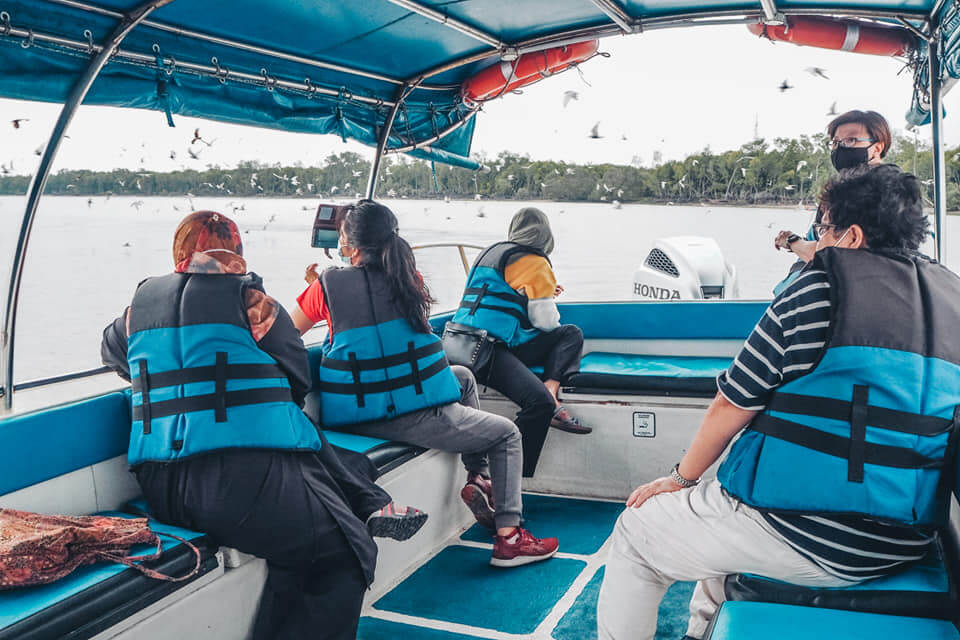
After putting on our life jackets, we boarded a boat that felt rather oversized for our small group. As it turned out, the extra space was useful, giving everyone room to move around and take photos.
When the boat slowed in a wider section of the river, flocks of seabirds suddenly appeared overhead. Not long after, we spotted the first eagle swooping down toward the water.
Within minutes, more followed, circling above the river before diving gracefully to snatch food from the surface.
What fascinated me most wasn’t the eagles themselves, but how all the birds managed to fly so closely together without colliding. At times, the smaller birds seemed close enough to touch, though of course we kept our hands to ourselves.
11. See the “blue tears”
After the eagle cruise, we had about an hour and a half before the next activity, so we stopped for dinner at a nearby restaurant before heading back to the river for the “blue tears” tour.
These tiny bioluminescent organisms emit a blue glow when the water is disturbed.
Each participant was given a small net attached to a long pole, and when we reached the site, the guide instructed us to dip our nets into the water. As we swirled them through the river, tiny blue sparks appeared in the ripples.
Naturally, some of us tried turning on our phone flashlights for a closer look. The moment we did, the glow disappeared completely.
Under darkness, the effect was fascinating, but don’t expect anything as impressive as what you see in tour brochures.

12. Watch fireflies
Next on our itinerary was firefly-watching. I had done this activity years earlier on a much smaller boat that could only accommodate five people, including the guide.
The smaller boat had its advantages. It was quieter, which meant we were less likely to disturb the fireflies, and we could get much closer to the trees where they gathered. The guide was also able to share more information about the insects throughout the tour.
This time, our boat was larger, but since there were only six of us onboard, it still felt fairly intimate. As we drifted through the darkness, clusters of fireflies blinked among the mangrove trees, creating what looked like tiny strings of fairy lights.
One of the highlights was getting the chance to hold a firefly briefly in the palm of our hands before releasing it again. It’s a simple experience, but one that never seems to lose its charm.
Klook.com13. Take a “sky mirror” tour at Sasaran Beach
Located in nearby Kuala Selangor, the Sky Mirror is one of the region’s most photographed attractions.
Often compared to Bolivia’s famous Salar de Uyuni, this sandbank emerges only during specific low-tide periods. When conditions are right, a thin layer of water creates a mirror-like reflection of the sky, making it seem as though you’re walking on clouds.
Because the phenomenon depends entirely on tides, tours operate only on selected dates each month. Unfortunately, the timing wasn’t right during our visit, so we had to skip that.
Klook.com14. Visit Terminal Sekinchan
A retired Boeing 727 parked in the middle of rice fields is probably not something you’d expect to find in rural Selangor, which is precisely why Terminal Sekinchan has become one of the town’s most recognizable attractions.
The airplane was originally part of a tourism project and has since become a popular photo stop for visitors exploring the countryside.
Adding to its charm is a Japanese-inspired “train station” complete with railway-themed decorations, nostalgic station signs, and a Totoro figure.
Visitors can also hop aboard a miniature train for a leisurely ride through the grounds, making it a fun stop for both adults and children.
15. Explore Bukit Melawati
Bukit Melawati is one of the region’s most important historical landmarks.
The hill was once the site of a fort built by the Selangor Sultanate and later occupied by the Dutch. Today, visitors can explore historical remains, visit the lighthouse, and enjoy sweeping views of the Straits of Malacca.
The hill is also famous for its population of silvered leaf monkeys, which are generally gentler and less aggressive than the long-tailed macaques commonly found elsewhere in Malaysia.
Other attractions on this hill include a royal mausoleum and a museum.

16. Enjoy Sekinchan’s local food
Thanks to its fishing and farming industries, the area is known for exceptionally fresh seafood, local produce, traditional snacks, mango-based treats, and unique rice products.
From duck-mouth clams (mentarang) to pearl-rice cendol, Sekinchan offers plenty of flavors that you won’t easily find elsewhere.
In fact, the food alone is reason enough to make the trip.
What & where to eat in Sekinchan
1. N16 Bus Cafe (update: permanently closed)
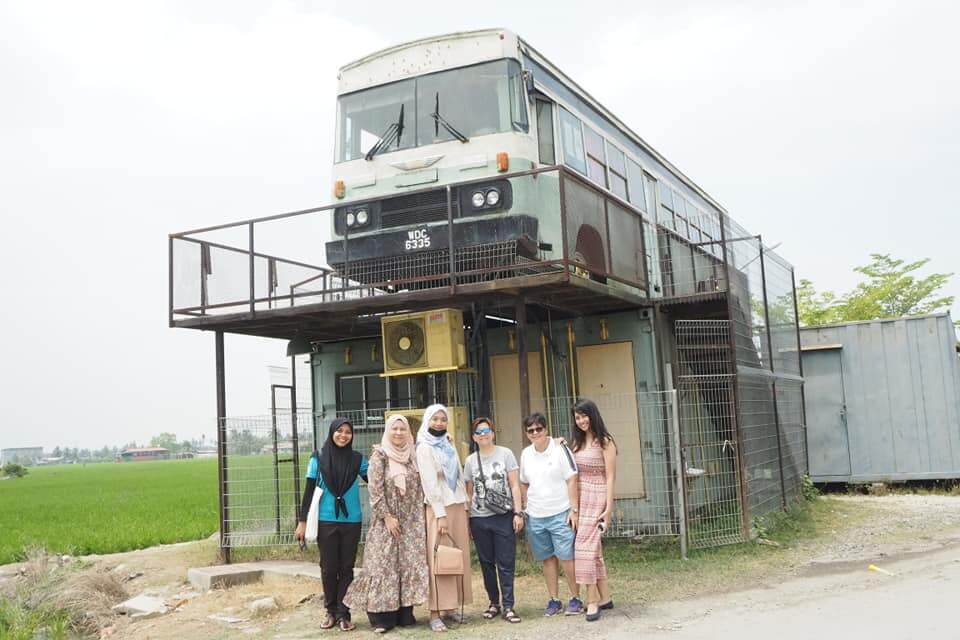
One of Sekinchan’s most iconic landmarks for many years was the N16 Bus Cafe, a quirky café housed inside a refurbished school bus perched atop a freight container overlooking the rice fields.
During my visit, it was located right next to Padi Box, where we were staying. Although it happened to be closed that day, I still couldn’t resist taking a few photos. Unfortunately, N16 Bus Cafe has since closed permanently.
2. Pearl-rice cendol at Paddy Gallery
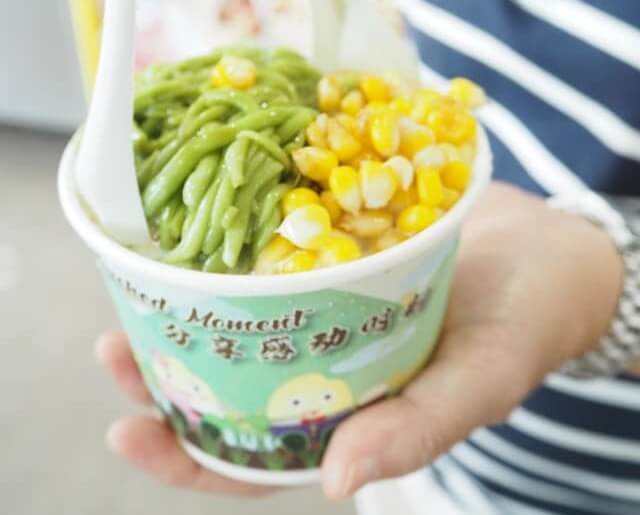
Few desserts are as beloved in Malaysia as cendol.
This refreshing combination of coconut milk, palm sugar syrup, green rice-flour jelly, red beans, and sweetcorn is the perfect antidote to a hot day.
At Paddy Gallery, you’ll find a unique local variation made with pearl rice, a short-grain sticky rice that adds an extra layer of texture to the dessert.
Besides cendol, the gallery also sells rice crackers, tapioca chips, banana chips, ice cream, and other locally made snacks that make great souvenirs.
3. Mangoes and smoothies at Mango King
Rice may be Sekinchan’s most famous crop, but it’s not the only thing grown here. Mango orchards can also be found around town, and one of the best places to enjoy the fruit is Mango King.
Located among the rice fields, this humble roadside stop is known for its thick mango smoothies, made using locally grown mangoes when in season.
In addition to smoothies, Mango King also sells fresh mangoes, fruit products, snacks, and other beverages.
4. Seafood
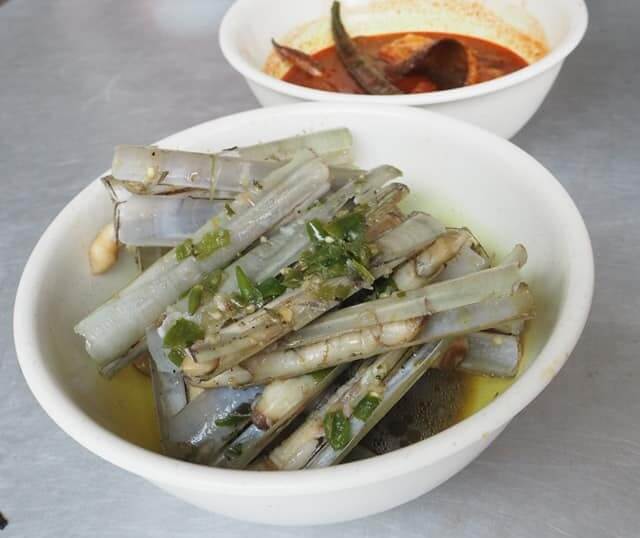

Being both a fishing village and an agricultural town, Sekinchan is naturally known for its seafood.
You’ll find numerous seafood restaurants throughout town serving everything from fish and prawns to crabs, clams, and squid. Both halal and non-halal options are widely available.
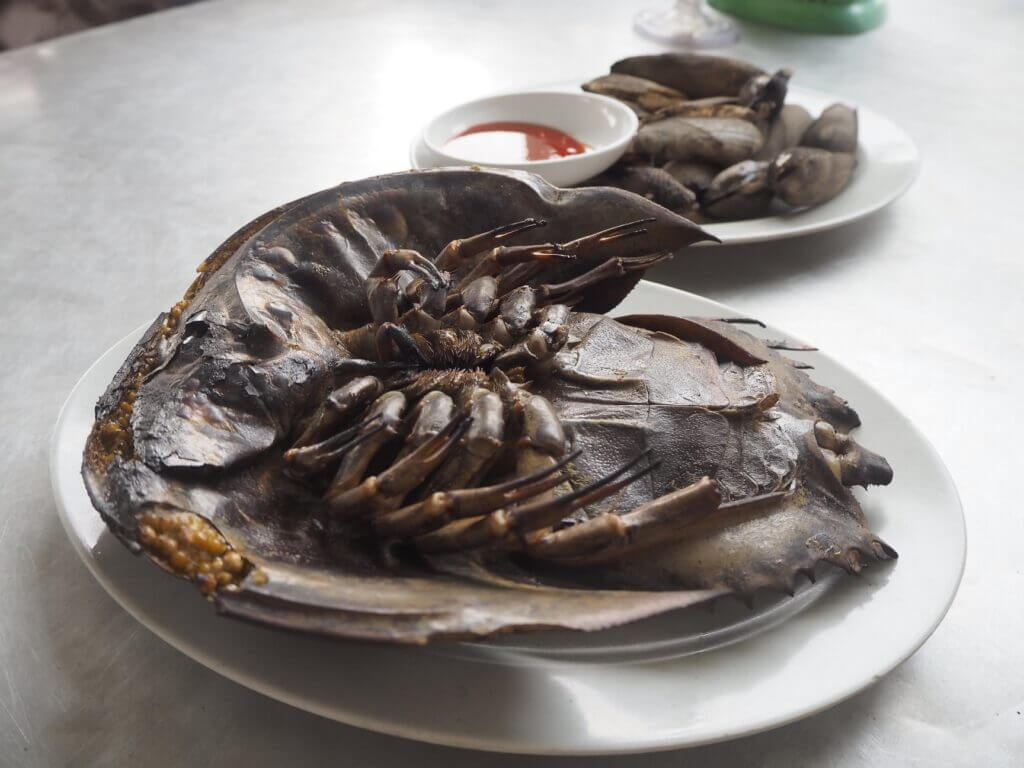
On our way back to Kuala Lumpur, we stopped at Faridah Mentarang Bakar to try one of the area’s specialties: mentarang, also known as duck clam. Larger than mussels and milder in flavor, they’re a local delicacy that many visitors seek out.
We also tried grilled horseshoe crab (belangkas), another dish that is less commonly found elsewhere in Malaysia.
If you’re a seafood lover, arriving hungry is highly recommended.
5. Coconut shake at Sekinchan Coconut Farm
For something a little different, head to Sekinchan Coconut Farm and reward yourself with a cold coconut shake after a day of exploring.
Set among rows of coconut trees, the farm offers a pleasant place to relax and escape the midday heat. Their creamy coconut shakes are the main attraction, but you’ll also find a variety of coconut-based snacks and local treats.
Depending on what’s available, you may find coconut pudding, coconut candy, fresh coconut water, nasi lemak, rojak, keropok lekor, seasonal fruits, and other local favorites on the menu.
How long to spend in Sekinchan
It’s entirely possible to visit Sekinchan as a day trip from Kuala Lumpur. If you start early and plan your route well, you can cover most of the town’s main attractions in a single day, including the rice fields, fishing village, temples, beach, and food spots.
That said, I think Sekinchan is best enjoyed at a slower pace.
Staying overnight allows you to experience the town during its quietest and most beautiful moments, whether that’s cycling through the rice fields in the early morning, watching the sunset by the coast, or simply waking up to uninterrupted views of greenery.
If you also plan to visit nearby attractions in Kuala Selangor, such as the fireflies, blue tears, Sky Mirror, or Bukit Melawati, then spending at least one night in the area is highly recommended.
Where to stay in Sekinchan
One of the fun things about staying in Sekinchan is that many accommodations are attractions in their own right. From container hotels surrounded by rice fields to family-friendly homestays, there are plenty of unique places to choose from.
Probably the most famous container hotel in Sekinchan, this eco-friendly accommodation is set in the middle of the rice fields. Each shipping container is painted in a different color, giving the property a cheerful personality that stands out against the surrounding greenery.
Inside, the rooms are comfortable and thoughtfully designed, making it easy to forget you’re staying in a converted freight container. The biggest draw, however, is the location.
You can see sweeping views of the paddy fields right from your bed.
Read the full review: Padi Box, Sekinchan — Container Hotel Amidst Rice Fields
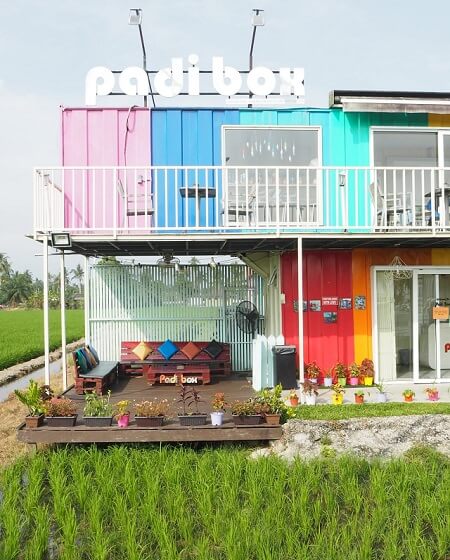

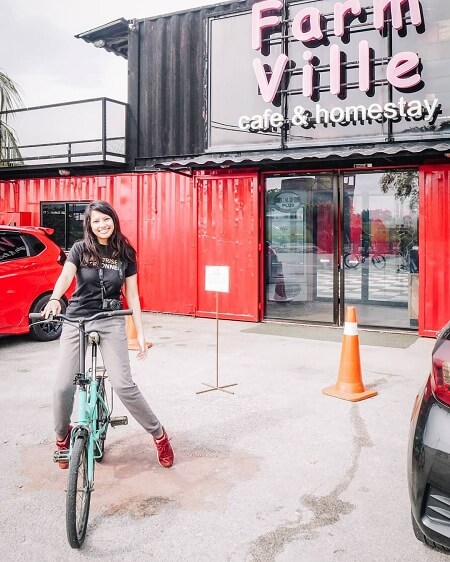
Located a short distance from Padi Box, Farm Ville Cafe & Homestay is another popular accommodation built from repurposed shipping containers. The red-and-black exterior creates a striking contrast against the green rice fields surrounding the property.

Another container-style accommodation surrounded by rice fields, Villa Chee features a bright green exterior that blends naturally into the landscape.
Some rooms come with private balconies overlooking the fields, while shared facilities include outdoor spaces where guests can relax and enjoy the countryside setting.
Container hotels not your thing?
Check out other hotels and homestays in Sekinchan here.
Final thoughts
I can’t believe that in all my years in Selangor, I had never visited Sekinchan, especially considering how much it has to offer. Even after spending a weekend here, I still didn’t manage to cover everything, so a return trip is definitely in order.
If you’re planning a visit, keep these tips in mind:
- Check the rice-growing season before you go. The scenery changes dramatically throughout the year, and timing can make a big difference.
- Prepare for the heat. Bring sunscreen, a hat, sunglasses, and plenty of water.
- Plan ahead for seasonal attractions. If you’re hoping to visit the Sky Mirror, check the tide schedule in advance.
- Consider staying overnight. While Sekinchan makes a great day trip from Kuala Lumpur, spending a night here lets you experience the rice fields at their most peaceful.
- Be respectful of the rice fields. Stick to designated paths and avoid trampling the crops.