Kampar Travel Guide: Attractions, Food, and Where to Stay
Kampar Perak Travel Guide: Best Things to Do, See & Eat
Kampar is a small town in Perak, about an hour from Ipoh and two hours from Kuala Lumpur by car.
We visited Kampar as a stopover on one of our road trips between Kuala Lumpur and Ipoh, as its location makes it an easy place to break up the journey.
Kampar is perhaps best known as a university town and a former tin-mining settlement, but there’s more to the district than its town center.
The wider district includes limestone caves, river adventures, agricultural attractions, and rural landscapes.
This guide covers Kampar District and nearby attractions worth visiting on the same trip.
This post may contain affiliate links, which means I may earn a commission at no extra cost to you. As an Amazon Associate, I earn from qualifying purchases. For more details, please read my Privacy Policy.
Kampar at a glance
Geography
Kampar District covers approximately 666.61 square kilometers in Perak, encompassing Kampar town, Gopeng, and surrounding settlements.
Its landscape includes limestone hills, rivers, agricultural land, and former tin-mining areas.
History
Kampar grew during the tin-mining boom of the late 19th and early 20th centuries. It was also the site of the Battle of Kampar during World War II, fought from December 30, 1941, to January 2, 1942.
Today, Universiti Tunku Abdul Rahman (UTAR) contributes to its identity as a university town.
Population & culture
The 2020 census recorded 98,732 residents in Kampar District, comprising approximately 49.3% Chinese, 39.9% Bumiputera, 10.5% Indian, and 0.4% other ethnic groups.
Bahasa Malaysia, Mandarin, Cantonese, Hakka, Tamil, and English are spoken. Religions represented include Islam, Buddhism, Taoism, Christianity, and Hinduism.
Best time to visit Kampar

Kampar is warm and humid year-round. June to August can be a reasonable period for outdoor activities, although rain is possible in any month.
The northeast monsoon, generally from November to February, can bring wetter conditions.
💡 Check the weather before booking cave tours or white-water rafting, as water levels and safety conditions can affect availability.
If you’re planning to visit HOGA Gaharu Tea Valley and Refarm, note that both are closed on Tuesdays, except for certain holidays.
Check their official websites for the latest opening hours before you go.
How to get to Kampar
🚗 By car
Driving is the most convenient option to get to and around Kampar. Allow roughly two hours from Kuala Lumpur and 45 minutes to an hour from Ipoh, depending on traffic.
🚂 By train
KTM’s Electric Train Service (ETS) serves Kampar Railway Station, making the train a practical option for travelers coming from Kuala Lumpur, Ipoh, and other destinations along the west coast rail corridor.
However, the station is not within walking distance of every attraction, so you will still need local transport after arriving.
🚌 By bus
Intercity buses are available from selected destinations, including Kuala Lumpur and Ipoh. Book ahead if visiting during busy periods.
How to get around in Kampar
The town center is reasonably walkable. However, most of the other attractions within the district are pretty spread out, so a car is the most practical way to visit.
Ride-hailing and taxis are useful for getting around town and reaching some nearby destinations, but availability may be limited beyond that.
A ride that is easy to book in one direction may be difficult to arrange for the return journey, especially later in the day.
If you’re heading to more remote attractions, arrange your return transport in advance.
Best things to do in and around Kampar
1. Explore the limestone chambers of Gua Tempurung

Gua Tempurung is one of the best-known natural attractions in the region and a must-visit if you enjoy caves, geology, or outdoor adventures.
It’s a large limestone cave system with impressive chambers, rock formations, and underground passages.
The experience varies considerably depending on which tour you choose:
Tours 1 and 2 are relatively easy walks through the dry sections, while Tours 3 and 4 involve getting wet and moving through the cave river with a guide.
We were hoping to join another group for the wet tour, but there was no one available, so we had to opt for Tour 2 instead.
If you’re planning to try the more adventurous tours, be sure to make an advance booking, but the sheer scale of the cave is enough to make the visit worthwhile, even if you choose one of the easier routes.
2. Take on the rapids of the Kampar River
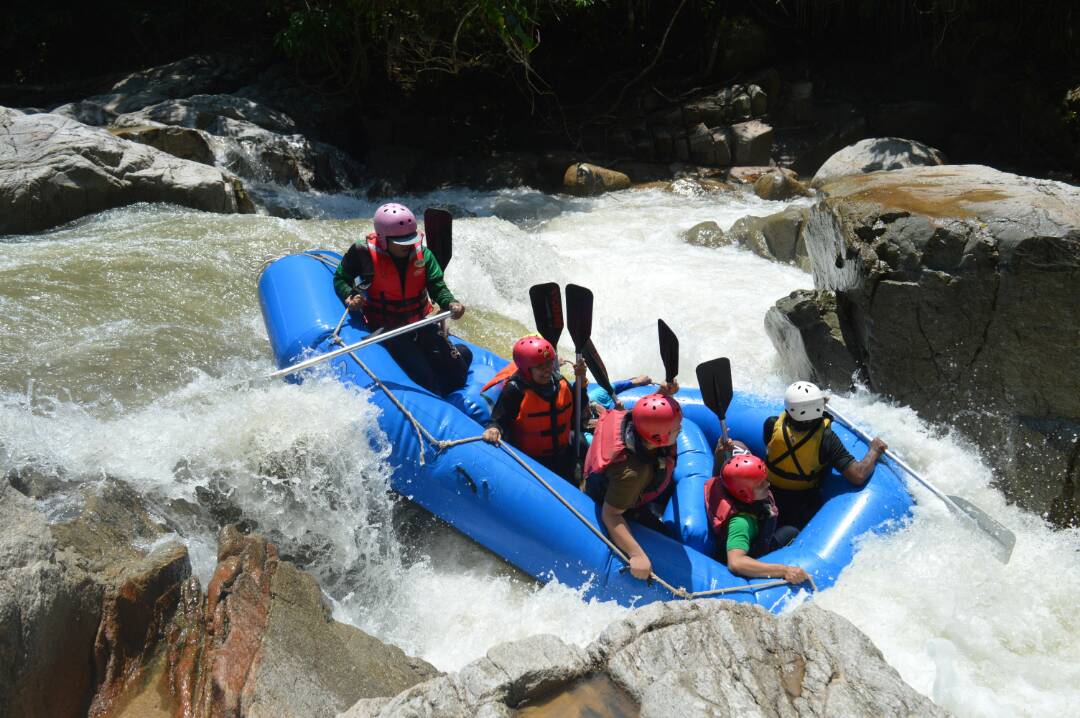
The Kampar River near Gopeng is popular for white-water rafting, with guided trips through rapids surrounded by tropical greenery.
The experience is generally offered through organized operators, who provide equipment, safety briefings, and guides.
Rapids can vary in difficulty according to the river section and water conditions, and operators may adjust or cancel trips when weather or water levels make rafting unsafe.
💡 Book with a reputable operator, check what the package includes, and bring a change of clothes.
There are tours that combine river rafting and Gua Tempurung for those who want a more adventurous trip, but doing both in one day can make for a physically demanding schedule.
I’ve tried white-water rafting in another part of Perak before, and for someone as unadventurous as me, it was more of a one-time bucket-list experience. So I gave it a pass this time around.
3. Visit HOGA Gaharu Tea Valley

Despite the name, this is not a conventional black tea or green tea plantation. Its focus is gaharu, also known as agarwood, a fragrant wood valued for its traditional, cultural, and commercial uses.
Visitors can tour the plantation, learn about agarwood cultivation, and discover how it’s used in products such as tea, fragrance, traditional medicine, and other lifestyle goods.
You can also try agarwood-infused drinks and food at the on-site restaurant and purchase products to take home.
Allow a few hours for the experience and check their official website for current activities, opening hours, and booking information.

4. Explore Kampar’s heritage streets
Kampar’s older commercial streets, including areas around Jalan Idris and Jalan Gopeng, offer glimpses of its tin-mining past through traditional shophouses and everyday local businesses.
You may also come across murals and small-scale public art around town, but don’t expect an extensive heritage district or street art scene like those in Ipoh or George Town.
It’s a place to explore without a checklist of must-see sights. The pleasure lies in wandering around and letting the streets reveal their little secrets to you.
5. Learn about Kampar’s tin-mining history

Tin mining played a major role in Kampar’s development, attracting workers and businesses and shaping the town’s multicultural character.
To learn more about this part of Perak’s history, visit the Kinta Tin Mining (Gravel Pump) Museum. It showcases the gravel pump method, once widely used in Malaysia’s tin-mining industry, particularly in the Kinta Valley.
Exhibits relating to the equipment and processes help visitors understand the work involved in an industry that once drove the local economy.
6. Play with animals and sleep in a cave at Refarm

Refarm is a recreational farm with animal attractions and outdoor facilities, making it a good stop for families or anyone who wants a break from sightseeing. We arrived before sunset and had time to explore the grounds before dinner.
The farm also offers various accommodation options, from regular rooms to larger units for groups. We stayed in a cave room, which was tiny but certainly quirky and memorable.
Check their official website for current room options, facilities, and opening hours.
7. Visit Kampar Gu Miao Temple in the Old Town
Kampar Gu Miao Temple is a traditional Chinese temple in Kampar’s old town, dating back to the early 20th century.
Visit to appreciate its architecture and learn about the Chinese community that helped shape Kampar during its tin-mining era. It’s an easy stop to combine with a walk around the old shophouses and nearby eateries.
Remember to dress respectfully, as it remains an active place of worship.
Check out my guide on how to dress for Malaysian weather and customs, so you can stay cool, comfortable, and respectful.
8. Visit Gopeng Museum to learn about the town’s past
Gopeng Museum offers a closer look at the history of Gopeng, a town that grew during Perak’s tin-mining boom.
Its collection includes old household items, historical photographs, and equipment associated with tin mining and rubber processing.
The museum also serves as a starting point for Gopeng heritage walks, which explore historic buildings and places around town. Visits are by appointment only, so contact the museum before making the trip.
9. Go on a day trip to Kellie’s Castle in Batu Gajah

Although technically located in Batu Gajah, just outside Kampar district, Kellie’s Castle is close enough to be grouped together with other Kampar attractions.
The unfinished mansion was commissioned by Scottish planter William Kellie-Smith in the early 20th century as a home for his family.
However, the castle was never completed. Construction stopped after his death in 1926, leaving behind a unique structure that visitors can explore today.
It also has a reputation for local ghost stories, and is often listed as one of the most haunted places in Malaysia.
Whether or not you believe in the supernatural, the building’s unfinished state and long history make it easy to appreciate.
Allow time to explore the building and its grounds rather than treating it as a quick stop.

10. Visit Tanjung Tualang Tin Dredge No. 5
While in Batu Gajah, take the time to visit Tanjung Tualang Tin Dredge No. 5 (TT5), one of Malaysia’s last surviving tin dredges. Built in 1938, this massive floating machine extracted tin from mining ponds and operated until 1982.
Today, it’s a preserved industrial heritage site where you can explore the machinery and learn about the tin-mining industry that shaped Perak.
Check the official website for visiting information.
11. Explore more of Kampar’s outdoor attractions
Kampar District has plenty to offer if you prefer forests, hills, waterfalls, and caves to museums and town walks.
- Gua Kandu: A limestone cave near Gopeng known for its rock formations and adventure-caving opportunities. Arrange a guided visit in advance.
- Batu Berangkai Waterfall: A forest waterfall near Kampar with natural pools and a peaceful setting for a picnic or nature break.
- Bukit Batu Putih: A short hiking option near Gopeng, known for its pale rock formations and views of the surrounding landscape.
- Sahom Orang Asli Village: Learn about the local Orang Asli community through an arranged, community-led visit.
12. Make a side trip to Lata Kinjang
Lata Kinjang is a spectacular multi-tiered waterfall near Chenderiang, in the neighboring Batang Padang District.
Surrounded by greenery, it’s another popular stop for visitors exploring Kampar and the surrounding areas.
You can enjoy the natural surroundings, picnic by the river, and swim in suitable spots when water conditions are safe. Be cautious during and after heavy rain.
Where to eat in Kampar
Kampar may not be a destination you visit for fine dining, but it’s still a good place to explore everyday Malaysian food.
Its multicultural, student-town vibe means plenty of affordable Chinese, Malay, and Indian food, plus casual cafés:

- Kampar Market (Kampar Food Center): Browse the hawker stalls for chee cheong fun, ham kok zai, handmade rice noodles, congee, char kuey teow, traditional kuih, and local snacks.
- Kelapa Leleh Kampor: Serves local comfort food like laksa and Malaysian-style Western dishes such as chicken chops, along with indulgent cold desserts. We shared a generous serving of coconut ice cream here.
- Wings Cottage Restaurant: Try its rojak, squid with paku fern, and mango chicken for a shared meal.
- Restoran Dim Sum Huang Yuan: Stop by for steamed and fried dim sum, including shrimp rice rolls, glutinous rice with chicken, and other Chinese-style bites.
- Nasi Kandar Beratur 786: A popular spot for nasi kandar and other mamak-style dishes.
- Kampar 36 Stalls Hawker Center: Look for traditional beef noodles with braised beef, tendon, and handmade beef balls.
- Yau Kee Restaurant: Known for Kampar’s famous curry chicken bread, with curry chicken baked inside a loaf of bread.
How long to stay in Kampar
A day trip from Kuala Lumpur or Ipoh is possible if you start early and focus on two or three attractions. Two days is a better option if you want to explore more attractions at a more relaxed pace.
If you’re planning to try several adventure activities, such as white-water rafting, hiking, and spelunking, while still making time for sightseeing, I’d recommend staying for at least three days.
This also gives you more flexibility if outdoor activities are affected by the weather.
Suggested itineraries
➤ One-day Kampar itinerary
This itinerary is best for travelers with a car (and good stamina).
- Morning: Start early and head to Gua Tempurung. Depending on the tour option and your pace, this can take up the whole morning.
- Afternoon: Continue with white-water rafting if you take a combined tour, or head to HOGA Gaharu Tea Valley for lunch and plantation tour.
- Evening: Head back toward Kampar town for dinner before driving home, or stay overnight.
➤ Two-day Kampar itinerary

DAY 1
Follow the itinerary above, but spend the night at Refarm or at a hotel in Kampar town, depending on your preference and budget.
DAY 2
- Morning: Spend more time enjoying Refarm’s facilities or go on a heritage walk around Kampar town, stopping for breakfast along the way.
- Mid-morning: Visit Kinta Tin Mining (Gravel Pump) Museum.
- Afternoon: Lunch in town and visit Kellie’s Castle in Batu Gajah.
- Evening: Return home or continue your trip to other parts of Perak.
➤ Three-day Kampar itinerary
Spread the activities from the two-day itinerary across three days for a more relaxed trip. Or add another adventure-filled day exploring Kampar’s outdoors:
DAY 3
Go caving at Gua Kandu, hike Bukit Batu Putih, visit Batu Berangkai Waterfall, or make a trip to Lata Kinjang Waterfall.
Choose one or combine a few, depending on your time, energy, and preference.
Where to stay in Kampar
Kampar has plenty of budget accommodation, boutique hotels, and homestays, although 5-star hotels may be a little harder to come by (read: nonexistent).
Here are a few top-rated accommodation options:
- MD Boutique Hotel
- M Boutique Kampar
- Vista Hotel
- Kampar Boutique Hotel (multiple branches)
- Grand Kampar Hotel
Additional tips for visiting Kampar
👉 Drive if possible. Attractions are spread across the district, and public transport is limited.
👉 Book adventure tours ahead. Wet cave tours require minimum group numbers and advance arrangements.
👉 Wear suitable footwear. Cave paths and outdoor surfaces can be slippery.
👉 Bring spare clothes and a towel. Essential for wet cave tours and rafting.
👉 Prepare for heat and rain. Bring water, sunscreen, a hat, and rain protection.
Check out my guide on how to survive Malaysian weather for practical tips to stay cool and comfortable while exploring.
👉 Check opening hours. Not all attractions or restaurants are open every day of the week.
👉 Carry some cash. Smaller shops and eateries may have limited payment options.
👉 Plan around the weather. Rain can affect outdoor activities and river conditions.
👉 Build flexibility into your itinerary. Tours, traffic, and adventurous activities can take longer or be more tiring than anticipated. Leave some room to slow down or stay longer if you need to.
Final thoughts

I would recommend Kampar to outdoorsy travelers who enjoy discovering places beyond the usual tourist circuit.
The district offers a fairly varied getaway, from exploring enormous cave chambers to learning about agarwood and tin-mining, taking on river rapids, and spending the night in a recreational farm.
Our trip combined nature, history, and a unique stay in one action-packed day.
If you have the time, spreading the attractions over two or three days will let you do more and enjoy them without rushing.
Kampar may not have as many attractions as Ipoh or Taiping, but it deserves more than a quick pit stop.
As for us, we’ll definitely be back to tackle Gua Tempurung’s wet cave tour and finish what we started!